Somebody or nobody 3:52
Everybody gets the blues sometime 2:49
There's a sound 5:15
The road to the rainbow's end 3:45
Dancing girl 2:23
Faraway places 4:15
No more a working man 4:37
Taking my time 3:54
The train to dreamland 3:23
The coin 4:22
I guess I'll have to call it a day 2:54
All songs written and arranged by Chris Flegg
This is my tenth album and features all original material drawn mainly from my acoustic singer/songwriter performances in folk clubs and elsewhere. Two tracks, Everybody Gets The Blues Sometime and I Guess I’ll Have To Call It A Day, are often found in my jazz gig set list but here are given a relaxed acoustic interpretation. Acoustic guitars are at the forefront of most of the arrangements, with flute provided by Paul Chapman, Harvey Weston playing double bass, and percussion from Rod Brown. This is an album of songs set at a relaxing tempo with lyrics which have a positive feel, occasionally serious but sometimes with gentle humour, and including two instrumental tracks Dancing Girl and Taking My Time.
This song is based on an incident that happened while I was charity busking in St Albans, being asked by a stranger "have you ever been somebody?”. This was followed by “did you ever want to be somebody?” and "never mind, the great thing about music is that you can carry on even if you are not successful!". As song says, "To my way of thinking, success is being whatever you want to be". In other words, if you aim for something important to you and get there then that is success, never mind how other people see it.
My albums of original material have usually included a blues of some sort so I needed a blues track and here it is, the last song written for the album. Getting the blues is something which I guess everybody feels to one extent or another, even when things are going well the blues can creep up on you. But as the song says, "tomorrow morning I'll be fine, everybody gets the blues sometime". I like this song because it has an interesting variation on a 12 bar sequence that works well in a jazz context as well as a folk/ blues context and it has proved to be much liked by audiences at all types of gig. The lead guitar on this track is played on my Gibson L5 guitar, the type of classic archtop single pickup guitar used by great jazz players such as Wes Montgomery, and gives this track a particularly jazzy feel, enhanced by the contributions of jazz double bassist Harvey Weston and the jazz feel of ever tasteful percussionist Rod Brown.
This song was previously featured in the album The Sound Of Life using a simple guitar and voice arrangement. This new version uses flute, double bass, synth, percussion and additional guitar parts to provide rhythmic and harmonic variation. The words conjure a succession of snapshots of the sound of life: "It's the bleat of a lamb, it's the cry of a child, it's the bell that tolls at the end of time..." without any obvious story line, yet many have commented that the song strikes some kind of resonance with their own inner thoughts about aspects of life, stirring memories and emotions.
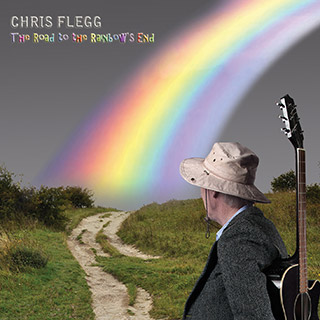
Leprechauns in Irish folklore have a hidden pot (or "crock") of gold at the end of a rainbow. Anyone who understands how rainbows happen will tell you that you cannot literally reach a rainbow's end and this makes for a useful metaphor for some goal in life which is unattainable. I would consider myself to be fundamentally a bit of a dreamer, pursuing some unachievable goal with my song writing and making music, and I recognise the same quality in some others I encounter in the music world. This song is for us dreamers, forever travelling the road to the rainbow's end and knowing that when the time comes to give up the quest, they will be content just have stories of rainbows that all got away. If all that does not make sense to you, don't worry, you are just not one of us dreamers!
This is an instrumental track in which the guitar and flute play melody and counter-melody, starting with a simple tune which develops with some interesting variations and changes in rhythm, and with a climactic ending that always makes me smile. For me the tune brings to mind the image of my young daughter dancing wildly round the kitchen to music on the radio.
My favourite track on this album, this song has a similar theme to that of the poem Ozymandias by Shelley which expresses the thought that everything fades with time, kings such as Ozymandias are forgotten and their cities and mighty monuments crumble to ruin. The song Far Away Places asks, in 1000 years, what will remain of our lives, "will my song be lost in the desert dust?". But this is not a doomy song, just realistic and maybe thought provoking and ends on an upbeat, if whimsical, note; "only time and love last forever". The interplay of guitar and voice on this arrangement leaves long guitar fills between vocal phrases with the intention of giving weight to the lyric and giving space to appreciate the harmonies of the musical setting. The tune changes from major to minor key for the part of the song where a lost and broken city is described and is done in a way that I find particularly atmospheric, particularly where it returns to the major key.
Upon reaching retirement, a friend of mine remarked that he still set his alarm clock early simply to be able to hear the traffic sounds of commuters rushing to work while he lay in bed. As someone who commuted by train for many years, I thought that my own response to retirement might be to put on my suit and tie and go down to the station to wave to the commuters packed like sardines into their trains; a fanciful thought but the starting point for a gently humorous look at how someone might behave when no more a working man. Getting into a weekly routine when no longer working presents challenges, but it can be done! My harmonica playing on this track is perhaps just what you might expect from someone with time on their hands and a simple instrument to master.
This instrumental piece has a very relaxed tempo and I find listening to it has a strangely calming effect. The lead guitar sound is achieved using an old Gibson electro acoustic jumbo (used on the My Green Guitar album) using the transducer output. This is in contrast to the close miked acoustic Gibson and Martin guitar sounds on most of this album and gives a great tone for the theme and a more edgy sound in the improvised section. The slow moving first part of the theme is simple and measured would almost be at home in an old Shadows album, were it not for the augmented and diminished chords on which the tune is based, while the bridge which goes into a minor key is more dramatic.
From the outset, the backing rhythm to this track chugs along like an old fashioned steam train and the acoustic sounding lead guitar uses double stopping in places for emphasis and gives the song something of a country feeling. The lyric is about our nightly transition from the real world to waking in dreamland, with comment on how we cannot survive without sleep and how half remembered dreams give an insight into our inner thoughts and feelings. I think that most people have experienced remembering a dream that stayed with them and had some effect on their lives. The idea of a train to dreamland is not in itself new, but I like the idea because I find it very easy to fall asleep on trains and have been known to imagine I was on a train when at home in bed trying to get off to sleep.
My grandmother liked to tell me stories of her life as a child in rural Suffolk, reciting poems she learned in the village school and telling of tricks played on her school teacher such as putting a frog in her inkwell. But she also told me of her first job as a scullery maid, how hard it was and how her employers tested her honesty by placing a coin for her to find. This song tells the story, as told to me. I sometimes wonder if my own attitude to employers over the years was coloured by this story, probably yes, as I always was reluctant to fully commit myself to any job and I always perceived an unjust inequality between the lives of workers and those who employ them.
When playing jazz with my trio, we enjoy playing jazz standards from the golden age of jazz and many of them have a 32 bar structure with an AABA format. This song is a pastiche of such standards in its structure and sentiment and tells a classic boy meets girl story. In the song however the girl is late for a date and the boy is resigned to calling it a day, then suddenly she arrives and all is well; from gloom to roses in a split second, and she makes his day! We have all been there in some way or another and possibly for that reason this song generally gets an audience smiling.
Enjoy!
Chris Flegg.
There’s something relaxing, soothing almost soporific about Chris Flegg’s music – mellow vocal delivery, gently engaging instrumentation and perfectly placed observations that range from softly sarcastic to poignantly perceptive. His latest album, ‘The Road to the Rainbow’s End’ the tenth in an ongoing series, offers an amalgam of folk finely blended with touches of jazz and a soupcon of blues. And before anyone has the wrong idea, the ‘soporific’ reference does not mean sleep-inducing; it means calming, a narcotic for stress, because this album eliminated all of mine.
Although Flegg’s music is unfussed and peaceful it has the capacity to make you think about what the man says. The gentleness of the delivery masks some touching reflections that begin as personal but end up reaching a far wider audience, such as the thoughts conjured by ‘Somebody or Nobody’, the shared images raised within ‘There’s A Sound’, perhaps the flow of dreaming moving through ‘The Road to the Rainbow’s End’ the wry humour of ‘No More A Working Man’ or maybe the fragile determination laid out in the tale of ‘The Coin’.
Reviewer: Charlie Elland 21 March 2016
It was a delight to receive Chris Flegg’s latest CD “The Road To The Rainbow’s End”. He has an understated mastery of his music that creates an intimate atmosphere and a warm feeling on the coldest day. There's an unfussy brilliance about all of his work that I admire greatly. The CD is an absolute treat.
I shall make it CD of the week this coming Monday 2nd May on A World Of Difference. I’ll be playing a track an hour, roughly on the half hour between 7 & 10.
Roger Williams April 2016
Roger Williams Presents "A World Of Difference" for Trent Sound in Nottingham every Monday night between 7 and 10.00 p.m.
Chris is a St. Albans-based guitarist and songwriter, and this is his 10th album; his inspired songmaking is a blurred line between melodic folk, poetry and jazz, with creative and delightful chord progressions that keep on popping up and surfacing. Three session musicians, flautist Paul Chapman, double-bassist Harvey Weston and percussionist Rod Brown, engender an atmosphere that’s reminiscent of smoky night-club days of yore, and what musicians they are; instrumentals come to the fore on the last track, ‘I’ll Guess I’ll Have To Call It A Day’. Chris steers the whole album with his relaxed solo voice, and the CD draws the listener in and nets him.
Favourite tracks are ‘Somebody Or Nobody’, the instrumental ‘Dancing Girl’, ‘The Train To Dreamland’ (which focuses on the same subject as The Seekers’ hit ‘Morningtown Ride’) and, of course, the album’s title ‘The Road To The Rainbow’s End’
Mick Tems Editor - FolkWales Magazine March 2016
The Road To The Rainbow's End is St Albans-based singer-songwriter Chris Flegg's tenth CD and comprises eleven original songs. Flegg is an enjoyably relaxed performer, his voice is pleasant, he's a very proficient guitarist and his songs often have interesting chord progressions. They have interestingly varied subject matter as well. 'Somebody Or Nobody' was inspired by a troubling, casually dismissive comment uttered by someone listening to him perform; 'Faraway Places' is about time's remorselessly destructive power; 'No More A Working Man' is about enjoying, a tad gloatingly, retiring from the rat race; 'The Coin' is essentially an instructive anecdote about his grandmother's early working life; and 'Dancing Girl' is a sparkling instrumental inspired by his young daughter's antics listening to music on the radio.
Flegg, as well as playing in his local folk clubs, has a parallel life as a jazz musician and that side of his musical personality can be seen in 'Everybody Gets The Blues Sometimes' and the gently swinging 'I Guess I'll Have To Call It A Day'. On some songs he overdubs either bass, harmonica or keyboards.
Elsewhere flautist Paul Chapman, double bassist Harvey Weston and percussionist Rod Brown contribute tastefully.
Rock'n'Reel Magazine July 2016
CD including lyrics booklet £10 plus £2 postage and packing
You can also buy individual tracks or the whole album as a download from iTunes.
© 2025 Chris Flegg All rights reserved. Edit